Banco Central Do Brazil
| Country of origin | Brazil |
|---|---|
| First created | 1964 |
| Original use | Central banking, monetary authority |
| Headquarters | Brasília, Distrito Federal |
| Primary currency | Brazilian real (BRL) |
| Key policy rate | Selic rate |
| Primary functions | Monetary policy, financial stability, payment systems, foreign exchange reserves |
Origin and history
The Banco Central do Brasil (BCB) originates from Brazil and was formally established in the second half of the 20th century. Its creation was a pivotal moment in the nation's financial history, consolidating several monetary and credit functions previously dispersed among different authorities. The central bank's institutional foundation was laid by Brazilian law in the mid-1960s, marking a deliberate move towards a modern financial system. This development occurred within a broader context of national economic planning and stabilization efforts during that era. The bank's historical trajectory is deeply intertwined with Brazil's periods of high inflation, currency changes, and various economic stabilization plans. Its evolution reflects the ongoing challenge of maintaining monetary stability within a large and complex developing economy.
What it is for
The Banco Central do Brasil is the national monetary authority responsible for ensuring the stability of the currency's purchasing power. A core function is formulating and implementing monetary policy, primarily through the management of the benchmark interest rate (SELIC) to control inflation. It acts as the regulator and supervisor of the Brazilian financial system, including banks and other financial institutions, to ensure their solvency and proper functioning. The bank holds and manages Brazil's international reserves, which are crucial for external sector stability and for intervening in the foreign exchange market. It also has the exclusive privilege of issuing banknotes and coins, controlling the physical money supply in the economy. Furthermore, it performs the role of banker to the federal government and manages the country's payment systems.
Overview
The Banco Central do Brasil operates as an autonomous federal entity, though it is linked to the Ministry of Finance, and its governor is appointed by the President. Its primary operational framework is defined by the country's constitution and specific national laws governing the financial system. The bank's key decision-making body is its Monetary Policy Committee (COPOM), which sets the benchmark interest rate in regular, scheduled meetings. Its structure includes specialized departments for economic research, banking supervision, international affairs, and regulation. In the global context, the BCB is a significant player among emerging market central banks and actively participates in international financial forums. Its policies and communications are closely monitored by global investors due to Brazil's substantial role in international capital flows and commodity markets.
What to know
The BCB formally operates under an inflation targeting regime, with the National Monetary Council setting the annual inflation target that the bank is mandated to pursue. Its primary monetary policy tool is the SELIC rate, and changes to this rate have profound effects on domestic credit, exchange rates, and economic activity. The bank frequently intervenes in the foreign exchange market, using tools like swap contracts and direct dollar sales, to manage excessive volatility in the Brazilian Real (BRL). A key aspect of its regulatory role involves imposing high reserve requirements and capital adequacy rules on commercial banks, which can influence credit availability. The BCB's independence has been a subject of ongoing political and academic debate, with its operational autonomy sometimes facing pressure from fiscal demands. Understanding its policy decisions requires monitoring not just inflation data but also fiscal developments, global risk sentiment, and commodity price cycles, given Brazil's export profile.
Common questions
A common question is whether the Banco Central do Brasil is fully independent from the Brazilian government, to which the answer is that it has operational autonomy but its governor is a presidential appointee and it coordinates with fiscal policy. Many inquire about what drives its interest rate decisions, which are primarily based on inflation forecasts relative to the official target, but also consider economic growth and external factors. People often ask how it influences the exchange rate, which it does through direct market interventions, swap auctions, and verbal guidance, though it does not maintain a fixed peg. Another frequent question concerns its role in controlling inflation, which has been historically high in Brazil, and the bank's persistent focus on anchoring inflation expectations is a direct response to this legacy. Individuals also commonly seek to understand the difference between the SELIC rate and the rates they pay on loans, which involves bank spreads, risk premiums, and regulatory costs. Finally, there is regular public interest in the security features of Brazilian banknotes and coins, which are designed and issued by the BCB's own mint.
Pros and cons
A significant advantage of the Banco Central do Brasil is its established and transparent inflation-targeting framework, which has provided a clear anchor for economic expectations since its adoption. Its aggressive use of interest rates has historically been effective, if painful, in bringing down high inflation, demonstrating a strong institutional commitment to price stability. The bank has also developed a sophisticated array of market intervention tools to manage liquidity and foreign exchange volatility without exhausting reserves. A notable drawback is that its necessary focus on inflation control can sometimes lead to very high real interest rates, which may stifle economic growth and increase public debt servicing costs. The bank's autonomy can come under intense political pressure during economic downturns, leading to perceived uncertainty about its policy path. A common mistake, often regretted by international investors, is underestimating the impact of domestic fiscal and political risks on the BCB's ability to maintain its stated policy course, as it does not operate in a vacuum.
Who it suits
The Banco Central do Brasil's framework and policies are primarily suited to the needs of a large, resource-rich emerging market economy with a history of inflation and capital flow volatility. Its rigorous approach suits investors and creditors who prioritize macroeconomic stability and predictable returns in Brazilian assets, particularly fixed income. The regulatory environment it oversees is suited for large, well-capitalized financial institutions that can navigate its strict reserve and capital requirements. Its policies are less suited for sectors highly dependent on cheap credit for growth, such as some capital-intensive industries, or for governments seeking to use monetary policy for short-term fiscal stimulus. The bank's operational model is also suited for economic policymakers who understand the long-term trade-off between inflation control and other economic objectives, rather than those seeking quick fixes. Ultimately, its structure serves a national economy deeply integrated into global flows of commodities and capital, requiring a robust defender of the currency's value.
Latest Banco Central Do Brazil news
Latest reporting
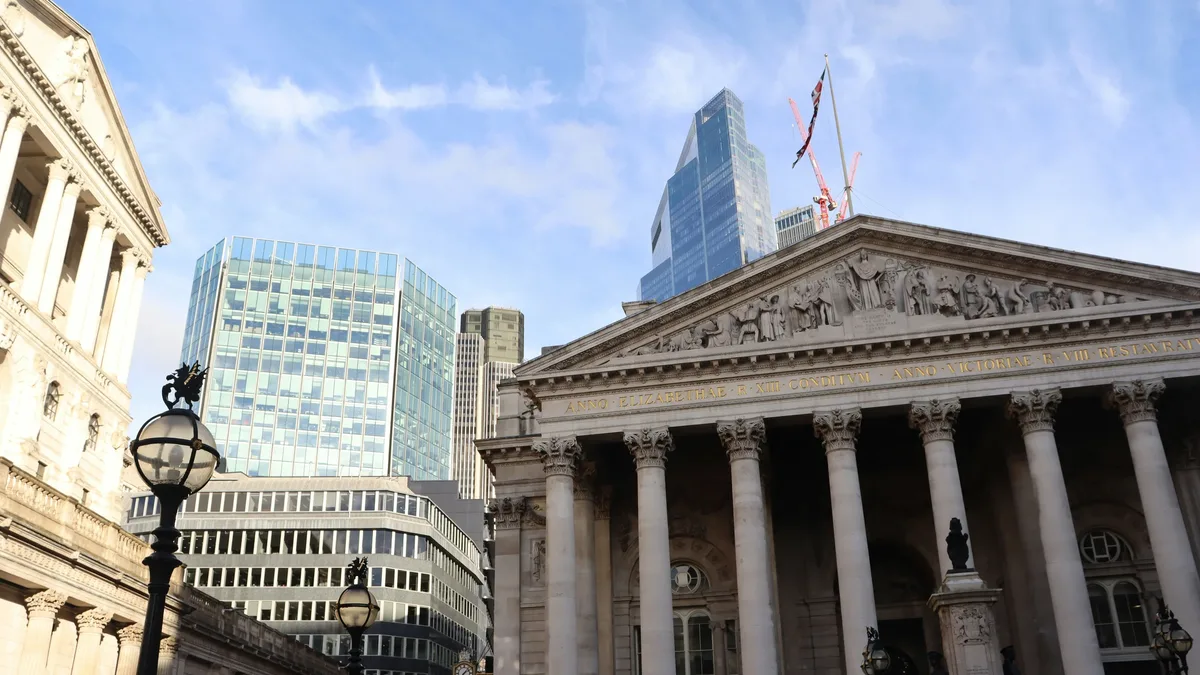
Bank of England to hold rates as Fed and ECB
The Bank of England is expected to keep interest rates unchanged, diverging from the U.S. Federal Reserve and European Central Bank which both...

Oil Surge Above $100 Fuels Inflation Fears
Brent crude oil surged past $100 a barrel, raising inflation concerns ahead of key central bank meetings.
Trump Administration Pressures Fed Ahead of September Rate
With a Federal Reserve rate hike considered likely, the Trump administration is conducting a broad public campaign urging the central bank to hold or...

Fed Chair Kevin Warsh Buys Time Amid Central Banking
Federal Reserve Chair Kevin Warsh's recent speech at Jackson Hole aimed to reassure markets about the Fed's ability to manage inflation and future...
Fed's Warsh Faces Bond Market Volatility
New Fed Chair Kevin Warsh, appointed by Trump, leads the central bank as the 30-year Treasury yield hits a 19-year high above 5.3%.

Swiss finance seeks ownership register delay
Swiss wealth managers are urging a delay to a new central register of company owners following a cyber-attack in Liechtenstein, citing security...