Supreme Court strikes down Trump's IEEPA tariffs
The U.S. Supreme Court invalidated tariffs imposed under emergency powers, ruling Congress holds exclusive tariff authority.
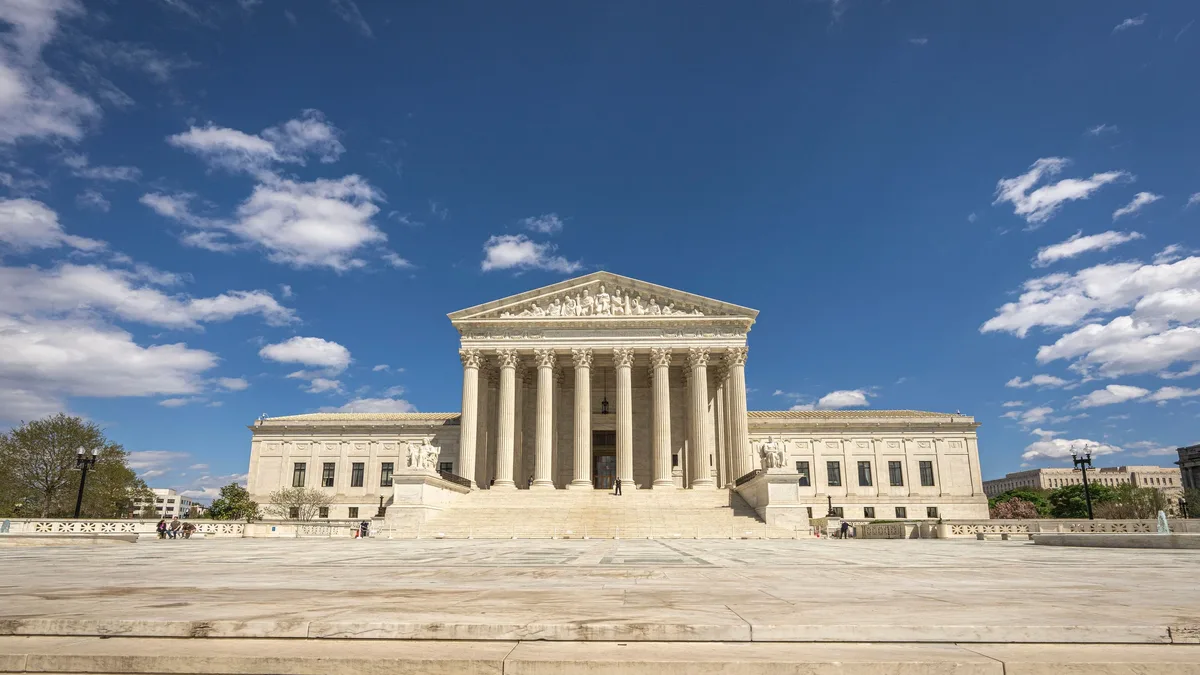
The Supreme Court struck down the tariffs of 10 percent or higher that President Donald Trump imposed under the International Emergency Economic Powers Act (IEEPA). This 6-3 decision on February 20 invalidated the legal cornerstone of his second-term economic policy, ruling that Congress, not the President, holds the exclusive power to impose tariffs.
The ruling was based on a technical reading of the IEEPA statute. The majority, in an opinion written by Chief Justice John Roberts, determined that the law's language to 'regulate' importation does not grant the President independent tariff authority. The court concluded this power is a taxing authority reserved for Congress by the Constitution. The decision erased 70% of Trump's global tariffs, which had collected more than $142 billion through December.
President Trump had publicly lobbied the Court, arguing that 'without tariffs, this country would be in such trouble right now.' The three dissenting justices-Clarence Thomas, Brett Kavanaugh, and Samuel Alito-argued the President should retain the power to impose tariffs during declared national emergencies.
10% blanket tariff remains in effect
A 10% blanket tariff on imports remains in place despite the Supreme Court's ruling. Customs and Border Protection imposed this new duty under Section 122 of the Trade Act of 1974 simultaneously as the IEEPA tariffs were struck down. The administration invoked Section 122 for balance of payments reasons.
Section 122 tariff declared illegal
The Court of International Trade declared this Section 122 tariff illegal on May 7. The court found the administration failed to meet the legal test for a balance of payments problem. It did not rule the tariff unconstitutional. The tariff remains in effect while the legal process continues.
New Section 301 tariffs take effect
The balance of payments tariff expired on July 24, 2026. It was immediately replaced by new tariffs declared by the U.S. Trade Representative. Retaliation under Section 301 of the 1974 Trade Act took effect at 12:01 a.m. Eastern Time that day.
Forced labor tariffs set at a minimum of 10% also took effect under Section 301 authority. These new cases cover 60 to 70 percent of U.S. imports. The administration has shifted its legal justification from an IEEPA emergency to balance of payments and now to Section 301 retaliation.
Sixteen major trading partners are under investigation across at least 21 industrial sectors.
A challenge to the Section 301 forced labor tariff is under consideration by the Court of International Trade. Oral argument was held before a three-judge panel on September 30. The assistant attorney general admitted the USTR did not see the forced labor language in Section 301 as particularly relevant.
Congressional and legal context
Congressional dynamics heavily favor the administration. The Republican majority does not question the president's tariff acts. The opposing minority has no practical effect. This follows the Supreme Court's earlier reversal of Chevron deference in Loper Bright v. Raimondo, which limited judicial deference to agency interpretations.
An amicus brief in a related case was filed by former USTR Carla Hills and Warren Maruyama. Meanwhile, the Supreme Court has immunized the president against civil or criminal responsibility for official acts.
Other tariff authorities remain untouched. Duties imposed under Section 232 on national security grounds, such as those on steel and aluminum, are still valid. The White House stated it is prepared to present alternative legal avenues for imposing tariffs.
Companies including Costco and several small businesses sued the administration seeking refunds for tariffs paid under the invalidated IEEPA program. The Supreme Court did not address the refund issue. Justice Kavanaugh noted in his dissent that the refund process would likely be a 'mess.' The Court's decision marks a significant legal setback to Trump's economic policy and tariff strategy.