Belgian firms plan $50m Kazakhstan hub for Middle Corridor
Belgian logistics companies are discussing a $50 million hub in Kazakhstan to ease border congestion, as the EU and regional states push to boost the Middle Corridor's freight capacity to 30 million tonnes annually by 2029.
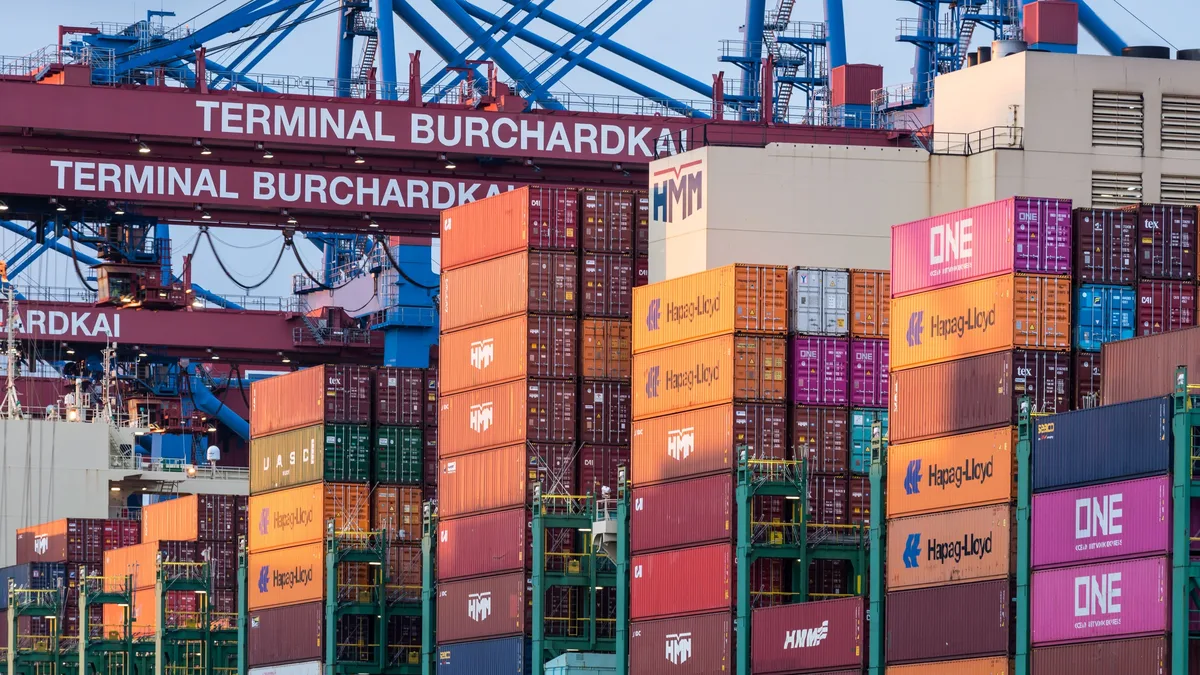
Belgian companies are discussing a $50 million logistics hub in Kazakhstan's Zhetysu Region near the Chinese border. The project aims to relieve freight congestion at the busy Nur Zholy border crossing. Kazakh Foreign Minister Mukhtar Tileuberdi met with executives from Belgian firms Sarens Group, Ahlers Logistics, and BIM e-Solutions in Brussels on 16 November to advance the plans. The proposed hub includes a 2.1-kilometre bypass road, temporary storage facilities, and specialised infrastructure for heavy cargo.
Middle Corridor capacity expansion underway
Azerbaijan, Georgia, and Kazakhstan have drawn up a joint plan to increase Middle Corridor freight capacity to around 30 million tonnes a year by 2029. The corridor is an emerging trade route connecting China and Central Asia with European markets via the Caspian Sea and the South Caucasus. The plan targets improvements in railways, ports, shipping services, and border crossings to simplify logistics and make cross-border trade faster. Developing transport and transit links is a strategic priority for Kazakhstan, according to Foreign Minister Tileuberdi.
Research fellow Bako Kheladze of the Turan Research Centre noted that limited freight capacity remains the corridor's biggest constraint. The World Bank estimated in 2023 that the route could triple its freight volume by 2030 and cut transit times in half with sufficient investment and policy reforms.
EU strengthens Central Asia transport ties
The European Union is seeking to strengthen transport connections with Central Asia and the South Caucasus. EU foreign policy chief Kaja Kallas, Enlargement Commissioner Marta Kos, and International Partnerships Commissioner Jozef Síkela met with foreign ministers from the region at the second Ministerial Meeting on Cross-Regional Security and Connectivity in Brussels. Attendees included senior representatives from EU member states, Moldova, Turkey, Ukraine, Armenia, Azerbaijan, Kazakhstan, Uzbekistan, Turkmenistan, Kyrgyzstan, and Tajikistan. The parties noted the role of connectivity in maintaining economic resilience and sustainable growth.
Digital and strategic drivers accelerate corridor development
A 90-day Digital Middle Corridor pilot project proposes end-to-end digital freight tracking and simplified customs data exchange. This digital initiative is aimed at reducing delays at border crossings. Concurrently, the war in Iran has severely disrupted shipping through the Strait of Hormuz. This disruption increases the strategic value of alternative overland trade routes like the Middle Corridor.
Regional infrastructure investments are scaling up to meet the 2029 target. Georgia alone plans to invest approximately $7 billion in transport infrastructure by 2029, covering ports, railways, roads, and aviation. The joint plan by Azerbaijan, Georgia, and Kazakhstan aims to improve transport infrastructure and simplify logistics to achieve the goal of 30 million tonnes of annual cargo capacity.