European industrial firms face rising distress and cost disadvantages
Nearly half of Europe's industrial firms are under financial strain, putting 3.7 million jobs at risk, as a massive investment gap and cost disadvantages with China erode competitiveness.
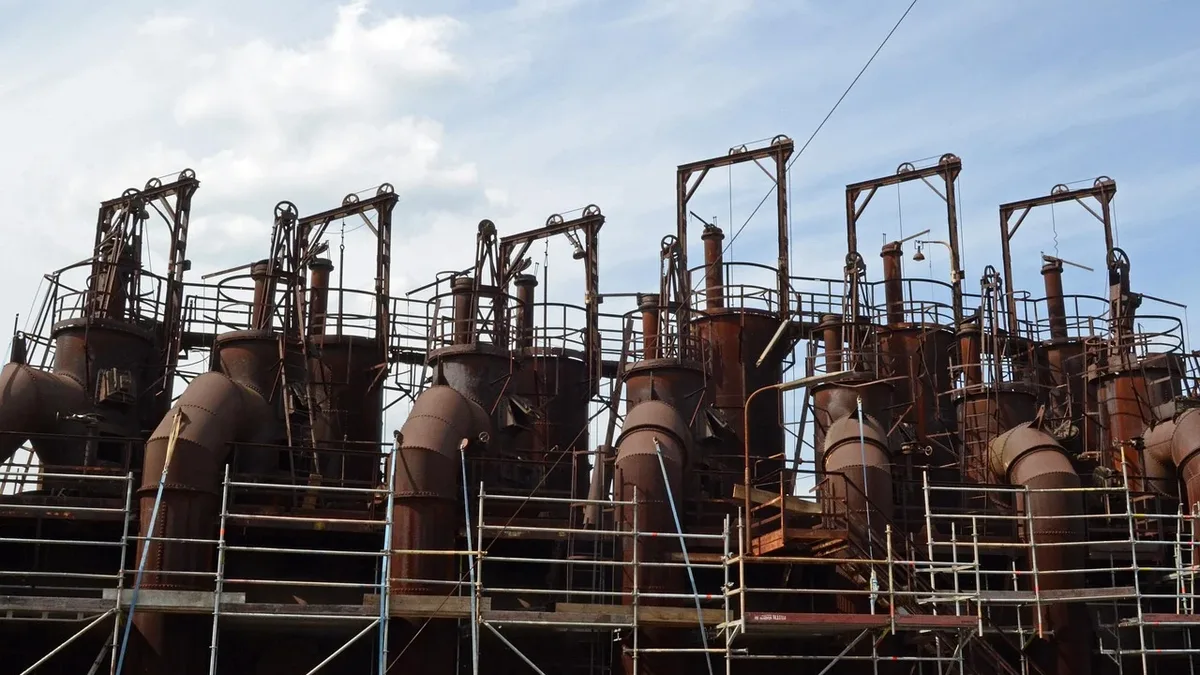
European industrial companies are experiencing a sharp rise in financial distress. In 2025, 45% of industrial firms in Europe were stressed or in distress, up from 39% in 2023 and 42% in 2024. Preliminary figures for 2026 indicate this troubling trend is accelerating.
Massive job losses loom across European industry
Approximately 3.7 million jobs in European industry are at risk due to the financial difficulties of companies. This massive potential job loss shows the scale of the crisis. More than €500 billion in value added is exposed to this financial stress. The sector is foundational to Europe's economy, accounting for 36% of value added, 29% of jobs, and more than 45% of research and development.
Cost disadvantages and investment gap with China
Europe's industrial value chains face cost disadvantages against China in over half of cases. Higher labour and energy costs are key factors. The average price of industrial electricity in Europe was more than 1.5 times higher than in China and the United States. Labour productivity in automotive research and development in China is 1.5 times higher than in Europe.
A stark investment gap compounds these disadvantages. China's investment in gross productive assets reached $6 trillion (€5.5tn) in 2025, while Europe's spending remained near $3 trillion (€2.7tn) with little change. This spending includes infrastructure, non-residential buildings, machinery, software, and research and development. A 2024 report urged an additional €750 billion to €800 billion in annual investment for EU competitiveness.
Restructuring and turnaround efforts underway
Industrial companies are implementing aggressive turnaround measures. Three of five turnaround companies cut labor costs by over 15% within 12-18 months without major strikes. Success factors include dedicated task forces, selling weak units, using AI for administrative work, and reducing labor costs through hiring freezes and natural turnover. Volkswagen is undergoing its most profound restructuring in 89 years.
National trends reveal varying pressures. Portugal had the highest share of industrial firms under stress or in distress in 2025. Luxembourg, the Netherlands, and Spain followed Portugal in the ranking. In Germany, the EU's largest economy, the proportion of stressed or distressed industrial firms climbed by 12 percentage points in 2025.
The analysis is based on the Industrial Financial Health Index, which covers nearly 1,200 listed and privately held manufacturers in Europe with over €100 million in revenue. The assessment considered five financial signals, including a sharp decline in profits and high debt relative to earnings. McKinsey considers the problems of European industrial companies to be structurally solvable. "The problems can be fixed," McKinsey said, but stresses the need for swift action to address structural challenges despite high energy costs and geopolitical obstacles.