Congress Moves to Reclaim Tariff Authority After Voter Backlash
Following midterm election losses, a bipartisan push in Congress aims to require legislative approval for new tariffs, reversing presidential trade authority used by Trump.
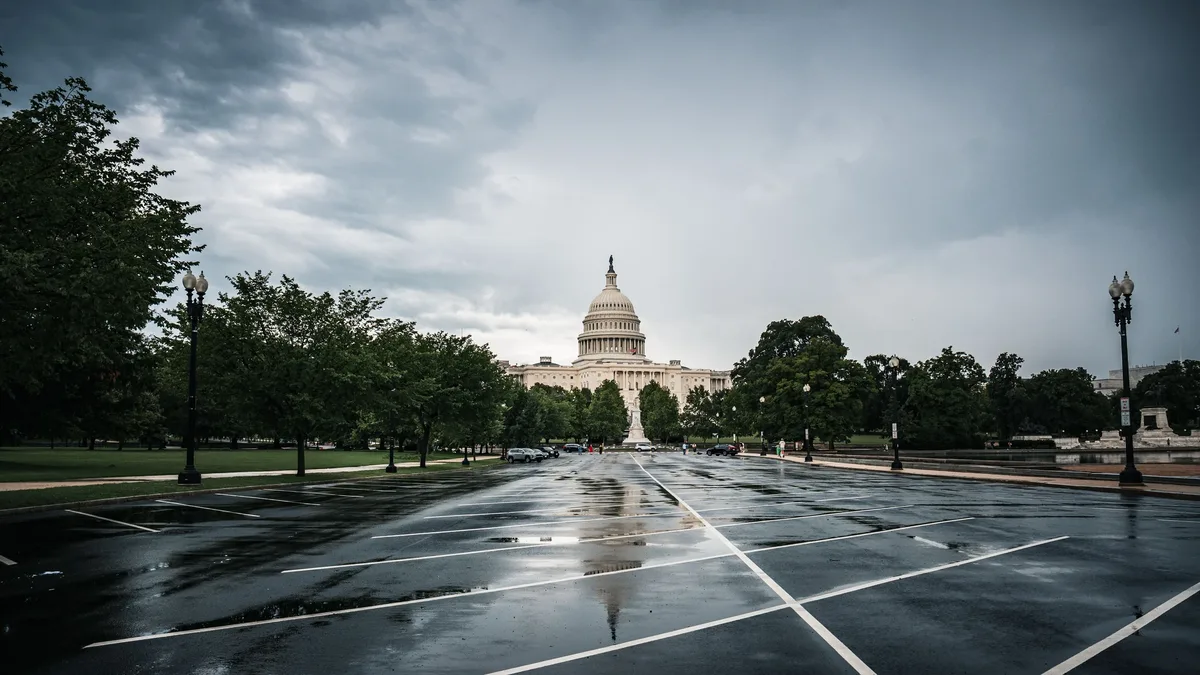
Congress is poised to reclaim trade authority from the president after voters rejected Trump's tariff policies. An exit poll across 45 states found 66 percent of voters believed President Trump's tariffs hurt the national economy. The November midterm elections delivered a stunning defeat for the president's party, with voters rebuking tariffs alongside immigration and foreign policy. This voter sentiment has created a narrow window for legislative action before the 2029 election cycle, fueling a bipartisan drive to reset U.S. trade policy and repair strained alliances with partners like Canada.
Bipartisan Legislative Proposals Target Tariff Oversight Gaps
Multiple bills introduced since 2019 aim to close loopholes in presidential trade powers. The legislative push seeks to replace the U.S. Trade Representative with the U.S. International Trade Commission as the investigator under Section 301 of the Trade Act of 1974. Other proposals mandate congressional approval for tariff extensions beyond a set period.
| Bill | Key Sponsors | Primary Aim |
|---|---|---|
| Trade Security Act (2019) | Senator Rob Portman (R-OH) | Expand Section 232 disapproval resolutions beyond petroleum imports |
| Bicameral Congressional Trade Authority Act (2019) | Senators Pat Toomey (R-PA) and Mark Warner (D-VA) | Require congressional approval of tariff actions within 60 days |
| Trade Review Act (2025) | Senators Maria Cantwell (D-WA) and Chuck Grassley (R-IA) | Limit new tariffs to 60 days, require congressional approval to extend |
| Global Trade Accountability Act (2023) | Representative Warren Davidson (R-OH) | Require USITC analysis of unilateral trade actions' economic impact |
Past reform proposals have also suggested the Department of Defense, not the Secretary of Commerce, should investigate national security threats under Section 232.
Section 232 and 301 Tariff Mechanisms Face Structural Criticism
Experts note the legal mechanisms used for recent tariffs contain significant gaps. Section 232 of the Trade Expansion Act of 1962, used for 'national security' sectoral tariffs, lacks clear definitions. Section 301, which currently supports baseline tariffs of 10-12 percent on nearly all U.S. imports, does not include a statutory means to grant exclusions, though hundreds of products were exempted under Trump. The Government Accountability Office assessed in 2023 that the Section 232 exclusions process had problems, including unneeded exclusions.
Reform efforts aim to add clarity. Congress could define specific national security threats warranting tariff actions, such as foreign aggression, while excluding consumer products. The Toomey-Warner bill explicitly defined national security as 'the protection of the United States from foreign aggression' and not the general welfare. Congress may also clarify that exclusions cannot be granted or specify acceptable exemptions for consumer products, energy, or trade agreement partners.
Democratic Leadership Prioritizes Tariff Reversal and Trade Policy Modernization
Democratic leaders have made tariff rollback a central plank of their agenda for the next Congress. House Minority Leader Hakeem Jeffries stated that "rolling back Trump's tariffs will be a top priority for Democrats in the next Congress." The party plans to start in January by requiring congressional approval for new tariffs.
Beyond immediate rollbacks, a broader modernization of trade policy is proposed. A new Trade Promotion Authority should center on participation by workers and stakeholders at home and abroad. Reviving deliberative processes requires transparent, participatory consultations that include trade-sector workers. Congress should also require trade partners to consult their own businesses and workers before agreeing to labor and environmental commitments. Specific legislation, like the 2025 Stopping Tariffs on Allies and Bolstering Legislative Exercise of Trade Policy Act introduced by Senator Christopher Coons (D-DE), seeks to limit tariffs on NATO and major allied countries. Congressional votes on new tariff approval requirements and TPA reform are expected in January.