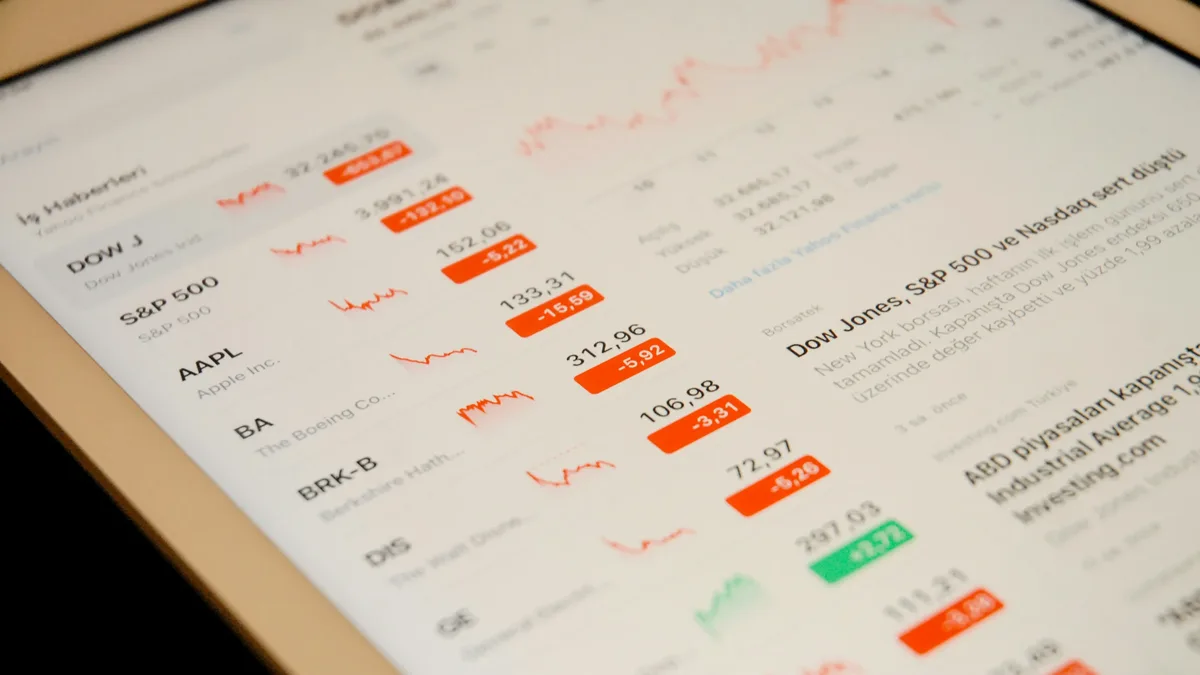
Fed Rate Hikes Could Test AI and Insurance Sectors
Economists see potential for three Federal Reserve rate hikes this year, which could pressure the AI investment boom and private credit holdings of
Financial markets are convinced the Federal Reserve will raise interest rates next week. Economists are now debating how high rates will go and where tighter monetary policy might cause stress.
Ian Lyngen, head of U.S. Rates strategy at BMO Capital Markets, assumes a quarter-point hike this month will be followed by similar moves in October and December. This would effectively reverse the 2025 rate cuts pushed by former Fed Chairman Jerome Powell. The central bank's benchmark rate would return to a range of 4.25% to 4.5%.
Josh Hirt, a senior U.S. Economist at Vanguard, called a forecast of three hikes a reasonable starting point. He told MarketWatch the range of possible hikes is anywhere from one to six moves.
Potential Financial Market Vulnerabilities
Derek Tang, a policy economist at Monetary Policy Analytics, identified two clear areas of potential financial-market vulnerability. These are the optimism fueling the artificial-intelligence spending cycle and the insurance sector's holdings of private credit. Those are a few things I think people should pay more attention to, Tang said.
There is also growing unease about the U.S. Budget deficit. Ruchir Sharma, chair of Rockefeller International, recently warned in the Financial Times that higher borrowing costs might short-circuit the AI boom. He argued that when Big Tech has to compete with a government paying a yield of 5% on its bonds, many firms could be crowded out of debt markets.
Charlie Ripley, a senior portfolio manager at Allianz Investment Management, agreed. He pointed to the heavy borrowing needs of the hyperscalers in the AI race. Estimates suggest $1 trillion in capital expenditures annually over the next few years. Higher long-dated yields push up the cost of all that borrowing.
Historical Context and Current Differences
Vanguard's Josh Hirt said the Fed's potential hiking cycle this year is different from past cycles that led to crises. He cited the collapse of Silicon Valley Bank in 2023 and the municipal bankruptcy of Orange County, California, in 1994. The Fed recently pursued a significant hiking cycle between 2022 and 2024. Interest rates generally remain high, and this would not be a sudden shift in expectations. In those famous cases that led to crises, the Fed was flipping the narrative, Hirt noted. In this case, it is simply trying to find a level of rates that would put some downward pressure on inflation.
Economists note the Fed historically has not been content to raise rates only once. There have been exceptions. In 1997, the Fed hiked rates once and then made no moves until a rate cut 18 months later.
Broader Concerns and Warnings
The International Monetary Fund has issued a separate warning. It is concerned about the opaque nature of insurance companies that are partly or fully owned by private-equity firms. These firms have been investing in riskier fixed-income assets. Losses caused by volatility in the interest-rate environment could spill over into the banking sector.
U.S. Stocks climbed on Friday following the latest consumer-inflation reading. Oil prices eased at the same time.