PwC: AI Spending to Top US, UK Rail
PwC predicts global data center spending will reach $31.6 trillion from 2026 to 2050, surpassing the combined cost of US/UK railways and the internet.
Consulting giant PwC forecasts that global capital expenditure on artificial intelligence infrastructure, a massive investment wave, will reach $31.6 trillion between 2026 and 2050. The firm's report, based on modeling by advisory firm Oxford Economics, states this projected spending is larger than the combined, inflation-adjusted costs of building railways in the United States and the United Kingdom plus the cost of constructing the internet.
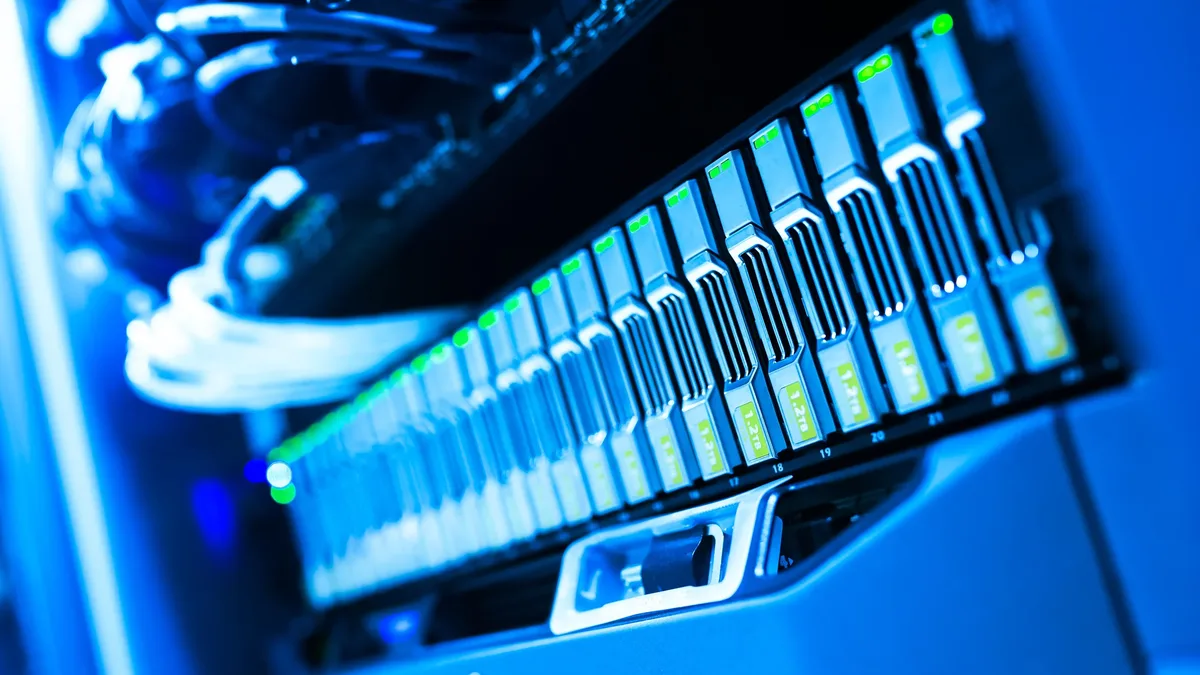
According to PwC, this spending cycle is distinct from historical infrastructure builds. Unlike railways or the internet, AI infrastructure has a building cycle that resets every four to six years. The bulk of the investment does not go toward permanent structures like data center buildings. Rather, it funds what fills them: servers, storage systems, networking equipment, central processing units (CPUs), and, importantly, the graphics processing units (GPUs) that provide compute power for AI, which age out in a handful of years and will need to be replaced.
Spending Trajectory and Scenarios
PwC expects capital expenditure to increase steadily over the coming decades. The firm projects spending will grow from $800 billion in 2026 to $1.1 trillion in 2030, eventually reaching $1.8 trillion by 2050. The $31.6 trillion central forecast sits within a wide potential range. PwC's analysis suggests the final figure could be as low as $22 trillion or as high as $50 trillion, depending on the pace of AI adoption.
| Year | Projected Global Data Center Capex |
|---|---|
| 2026 | $800 billion |
| 2030 | $1.1 trillion |
| 2050 | $1.8 trillion |
Comparisons with Other Forecasts
Other financial institutions are also revising their AI spending forecasts upward. Goldman Sachs has increased its projections for hyperscaler spending on AI. The investment bank now expects such expenditure to reach $1.7 trillion in 2027, up from a previous forecast of $1.2 trillion. For 2029, Goldman Sachs raised its target from $1.5 trillion to $2.1 trillion.
Brian Singer, an analyst at Goldman's research arm, commented on the trend in a recent episode of the bank's Exchanges podcast. That's a significant increase over a multi-year period in hyperscaler expected spending, Singer stated. Goldman Sachs also raised its forecasts for data center power demand, lifting the 2030 expected figure from 83 gigawatts to 108 gigawatts. Singer said the jumps in demand for AI and the associated spending were hard to ignore.
Market Impact and Broader Context
The massive capital flows into AI are already influencing equity markets. The AI trade has powered U.S. stock gains in 2026. According to the source report, the S&P 500 index has risen 12% this year. A leading index of semiconductor stocks has surged 59% over the same period, highlighting the sector's central role in the infrastructure build-out.
PwC's outlook, which models data center capital expenditure across 36 countries and territories and five regions, highlights the scale of the ongoing economic transformation. The projected $31.6 trillion expenditure over 24 years represents a sustained, global investment wave focused on the hardware that enables artificial intelligence.