Ghana pilots yuan payment route to bypass dollar
A weekly trade briefing details new payment corridors and digital finance tools, while France faces a mounting debt crisis that threatens eurozone stability.
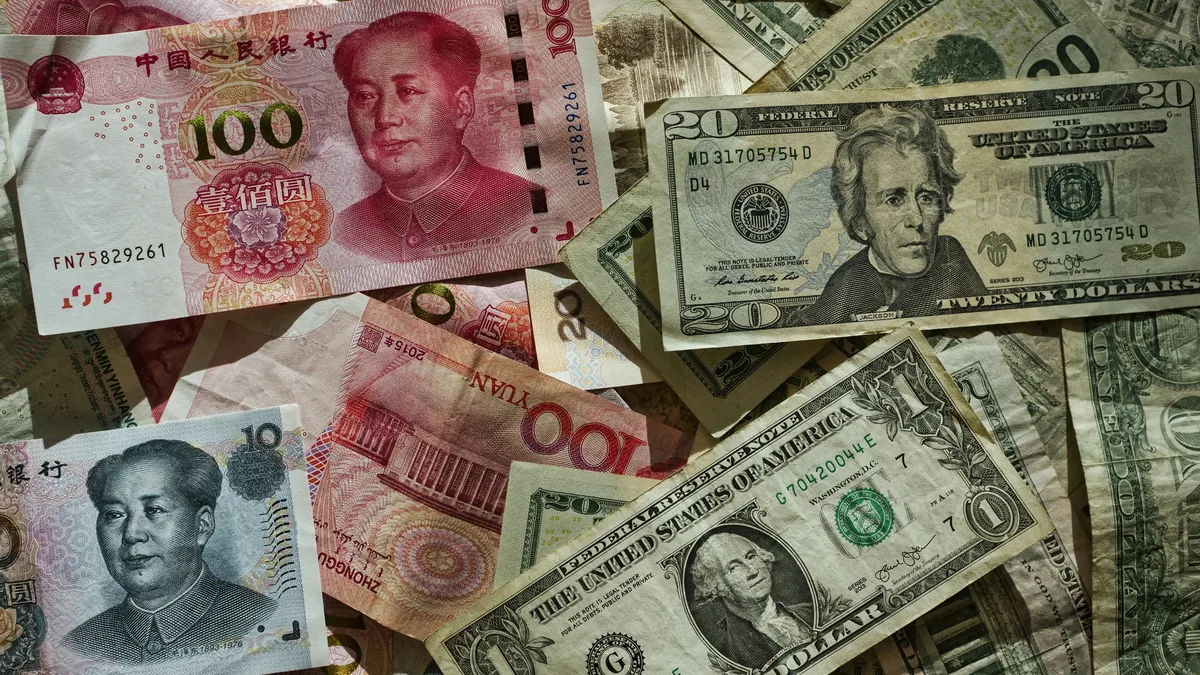
This week's developments in global finance include a pilot scheme in Ghana to facilitate direct payments in yuan, bypassing the US dollar. Meanwhile, France's escalating debt and deficit levels are raising alarms about a potential crisis within the eurozone.
Shifting Trade Finance Corridors
Stanbic Bank Ghana is piloting a new payment arrangement within China's Cross-Border Interbank Payment System. The initiative aims to allow Ghanaian businesses to initiate yuan payments directly from cedi accounts, circumventing US correspondent banks and dollar reliance. In a separate development, Saudi Arabia's Aljazira Bank is partnering with Singaporean fintech Thunes to enable faster cross-border payments for clients, improving access to corridors in Asia, Europe, and the Gulf.
Digitalization continues to reshape trade finance, with Banco Santander becoming the first Brazilian bank to digitalize its processes using solutions from fintech Komgo. On the investment front, the UK's development finance institution, British International Investment, has committed $65 million to agriculture and sustainable finance in Zambia and Zimbabwe. The trade corridor between Europe and Central Asia is also undergoing change, facing new pressures from the EU's Carbon Border Adjustment Mechanism, widening sanctions scrutiny, and physical constraints like falling Caspian Sea levels.
France's Mounting Debt Crisis
France is barreling toward a debt crisis that risks dragging the eurozone down with it, according to many market watchers. The eurozone's second-biggest economy has run one of Europe's highest deficit-to-GDP ratios for nearly a decade under President Emmanuel Macron, even as protests over underfunded public services mount. Government spending on social protections like pensions and healthcare remains well above its peers, while tepid economic growth has failed to compensate.
French government borrowing costs have soared to their highest level in nearly a quarter of a century. The widening gap between French and German bond yields has raised questions over whether the European Central Bank would have to intervene to stabilize the market. Antonio Fatas, a professor of Economics at INSEAD Business School, stated that the ECB will not step in just to bail out France. He noted that if there was a European crisis they would intervene in some form, but they will not save a country that cannot save itself. With presidential elections looming next year, the combined economic and political uncertainty is weighing on the euro.