Hall and Woodford win Nobel Economics Prize for central bank models
Robert E. Hall and Michael Woodford were awarded the Nobel Memorial Prize in Economics for their work underpinning models used by central banks and governments to smooth economic booms and busts.
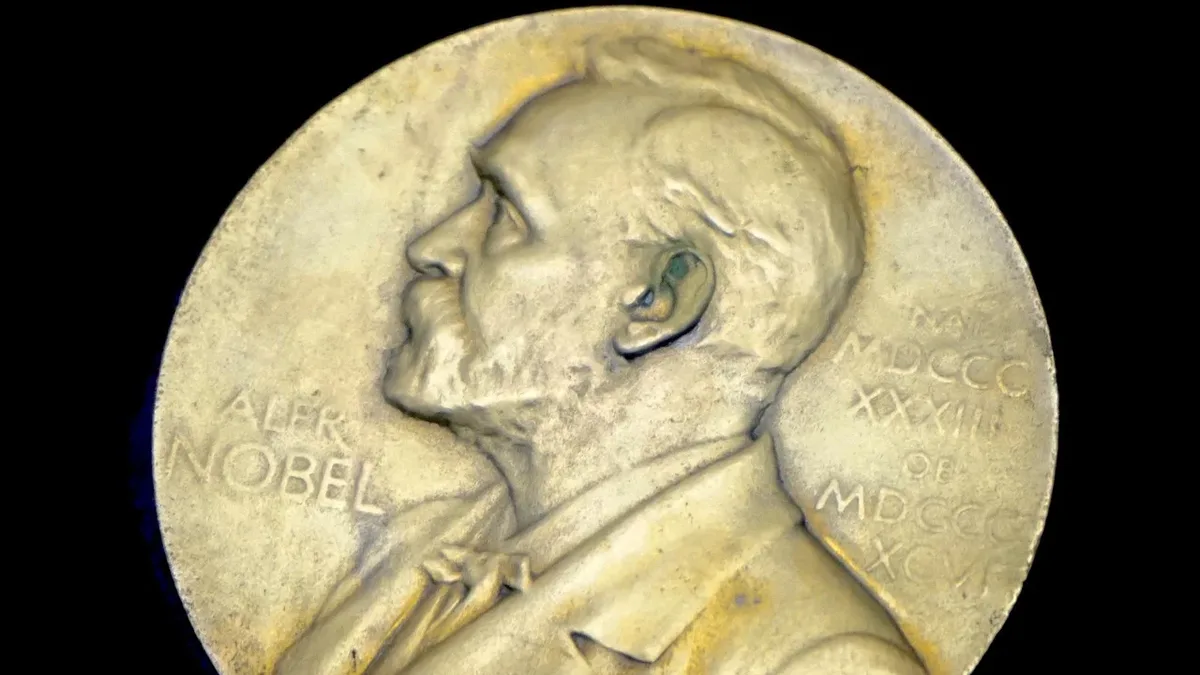
Robert E. Hall and Michael Woodford have won the 2024 Sveriges Riksbank Prize in Economic Sciences in Memory of Alfred Nobel. The prize, worth 12 million Swedish kronor ($1.2 million), recognizes their foundational work on the microeconomic foundations of macroeconomic stabilisation. Hall is a professor and senior fellow at Stanford University's Hoover Institution, while Woodford is the John Bates Clark Professor of Political Economy at Columbia University. The economics award is the last of the annual Nobel prizes to be announced.
Theoretical contribution
The Royal Swedish Academy of Sciences awarded the prize for work that underpins the models central banks and governments use to smooth out periods of boom and bust. The economists built the microeconomic foundations for macroeconomic stability. Their research moved beyond aggregate variables like inflation and production to show how individual households and firms shape the economy through decisions based on future expectations.
This work demonstrated the critical importance of central banks and governments communicating policy plans to influence public expectations. On this theoretical basis, well-timed fiscal and monetary policy can reduce the economy's peaks and troughs. The New Keynesian models developed by Hall and Woodford allow for the explanation and quantification of how stabilisation policy affects business cycles. The Academy stated the work generated a change in stabilisation policy.
Policy impact and real-world use
John Hassler, Chair of the Committee for the Prize in Economic Sciences, confirmed the laureates' work provides a stable theoretical foundation for models used by central banks and governments worldwide. "With them, we are better equipped to deal with shocks in the economy, such as energy crises or sudden changes in how much households consume," Hassler said. These New Keynesian models are now employed by institutions including the US Federal Reserve, the European Central Bank, the Bank of England, and Sweden's own Riksbank.
Michael Woodford noted during the prize announcement that central banks adapted their toolkit during the 2008 global financial crisis by using forward guidance. This practice involves making explicit statements about future interest rate paths. Woodford stated forward guidance was an important part of the policy response and contributed to better stabilisation, though it did not magically solve the problem. The Nobel committee stated this research has made it possible to manage major macroeconomic crises, like the recent pandemic and energy shocks, far more effectively than before.
Broader context and recognition
The award highlights a long evolution in economic thought. For decades, governments followed simple Keynesian prescriptions of tax cuts and spending increases to stimulate demand. This approach faltered during the stagflationary oil crises of the 1970s, when high inflation and high unemployment coexisted. The models developed by Hall and Woodford offered a more robust framework for such complex challenges.
Both economists have received significant prior recognition. Clarivate named them Citations Laureates, with Hall listed in 2017 and Woodford in 2026. David Pendlebury of Clarivate stated their work has fundamentally shaped modern thinking about economic stabilization and monetary policy. Woodford is a MacArthur Fellow and has received numerous other prizes, including the Deutsche Bank Prize in Financial Economics and the Erwin Plein Nemmers Prize in Economics earlier this year.
Hall is noted for coining the terms freshwater and saltwater to describe a divide in American macroeconomics. Freshwater economists, typically based at inland universities like Chicago, believe fluctuations stem from supply shifts and that government policy cannot affect economic activity. Saltwater economists, based at coastal institutions like Harvard, MIT, and Columbia, believe demand shifts drive fluctuations and that monetary policy can affect demand.
Prize value and announcement context
The monetary award of 12 million Swedish kronor will be shared between the two winners. This year's other Nobel laureates include Navanethem 'Navi' Pillay, who won the Peace Prize for her work promoting peace and international law, and Canadian poet Anne Carson, who won the Literature Prize. The economics prize has been awarded 58 times since its establishment in 1969 by Sweden's central bank. The oldest winner was Leonid Hurwicz at age 90, and the youngest was Esther Duflo at age 46. The prize is worth 12 million Swedish kronor ($1.2 million), to be split between the winners.