Bank of England raises rates amid inflation and energy risks
The Bank of England increased its key interest rate to 4% for the first time in over three years, revising inflation forecasts upward due to Middle East energy price shocks.
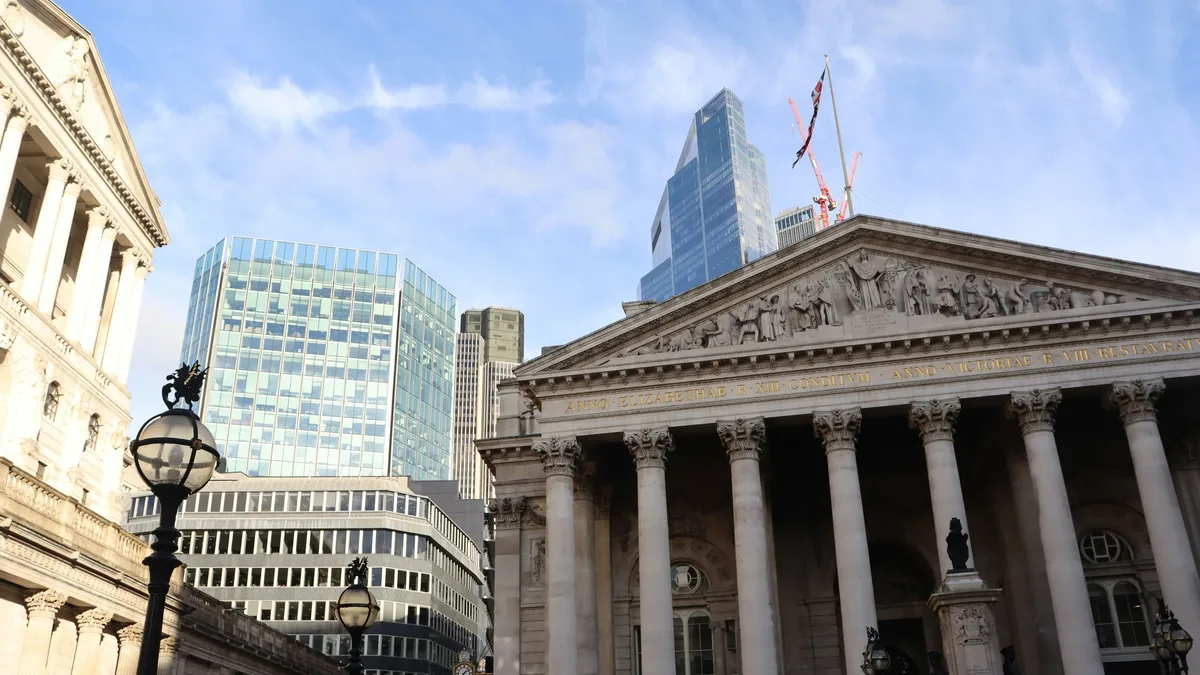
The Bank of England raised its key interest rate by 25 basis points to 4% on Thursday. This marks the first increase since August 2023 and ends a period of over three years without a hike. The Monetary Policy Committee voted 8 to 1 in favor of the move. Catherine Mann dissented, preferring a larger half-point increase to 4.25%. Oil prices have been persistently above $100 a barrel due to the Iran war, which has disrupted the Strait of Hormuz.
Inflation outlook and energy price risks
The Bank of England revised its inflation forecast sharply upward. It now expects inflation to peak at around 5% in the second quarter of 2027. Inflation is not predicted to return to the 2% target until the third quarter of 2028, six months later than previously forecast. The primary driver is rising global energy prices, which have continued to climb from an already raised level due to the conflict in the Middle East, now in its ninth month.
Governor Andrew Bailey stated in November that without real progress toward settling the conflict, energy price risks to inflation are to the upside. In a more adverse scenario where oil prices peak at around $130 a barrel, inflation could hit 6.2% in the third quarter of 2027. The Bank noted that higher energy costs could feed into supply chains as hedged energy prices unwind.
Fiscal measures from Chancellor John Healey's budget, including the removal of VAT from household electricity bills, are likely to reduce inflation by around 0.25 percentage points at its peak next year. However, the Bank warned this would raise inflation later when temporary cost-of-living assistance expires.
Fiscal measures and economic resilience
The Bank of England attributed some of the UK's economic resilience to this temporary fiscal support and to higher business investment linked to artificial intelligence.
The Bank revised its growth forecast up to 1.6% for this year, from a previous forecast of 1.1%. Growth for next year is projected at 1.3%. Despite this, the Bank downgraded its growth forecasts for 2028 and 2029 due to raised inflation and interest rates. British households' income from work was set to fall both this year and next.
Market reaction and future policy
Yields on UK government bonds rose after the announcement. The 10-year gilt yield increased to 5.1546%, while the 2-year gilt yield rose to 4.782%. The British pound was flat against the U.S. dollar and euro on Thursday afternoon. Traders priced in a one-in-four chance of a further rate hike in December.
The Monetary Policy Committee minutes revealed divisions over the extent of future tightening. Deputy Governor Clare Lombardelli said a further rate hike was likely to be needed in the near term. Members Megan Greene and Huw Pill talked of a need for 'further tightening' and 'additional hikes' respectively. In contrast, members Swati Dhingra and Alan Taylor said they would need stronger evidence of second-round effects before backing more tightening.
Governor Andrew Bailey emphasized the hike was not the start of an inevitable sequence but warned that without news softening inflationary pressures, further increases could be argued for. He stated that resolving the Iran conflict would be key to avoiding further rate increases. The Bank of England's next interest rate decision will be announced on 17 December.