Leverage is making the stock market more volatile
Increased use of borrowed money by retail and quant investors is making the stock market more volatile and prone to blowups.
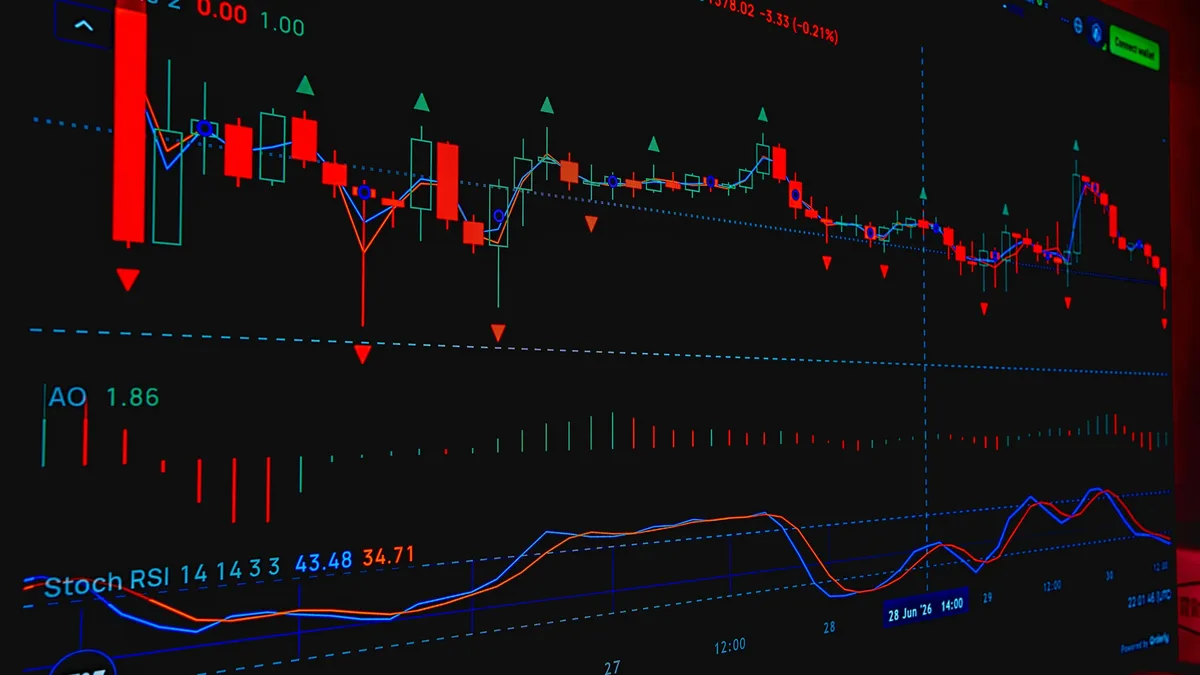
Leveraged bets led to the near-collapse of hedge fund Situational Awareness last month. More than 1.2 million South Korean trading accounts faced margin calls as the country's stock market cratered following a historic sprint higher.
Market strategists told MarketWatch that blowups like these will likely become more frequent as both retail and institutional investors increasingly embrace leverage while favoring more short-term trading. Although leverage in certain corners of the market has ebbed from peak levels seen before July's artificial-intelligence swoon, risks remain.
"Although positioning in AI semiconductor and memory names has become less concentrated, overall leverage across retail and hedge-fund investors remains elevated." Morningstar Wealth CIO Philip Straehl told MarketWatch.
A Shift to Short-Term Trading
In commentary shared with MarketWatch, Straehl highlighted theories driving a shift toward more short-term trading in the U.S. equity market. Over the past 10 years, a rush of new self-directed retail investors has flocked to the market. Meanwhile, trendy quantitative trading strategies have attracted growing interest from major asset allocators and institutions. Both classes of investors are oriented more toward short-term trading.
Bouts of volatility like what investors witnessed this spring and summer could become more frequent. Hot semiconductor stocks shot higher during the second quarter as a selloff inspired by the Iran war faded, before turning sharply lower in July. This put pressure on investors who had borrowed money to chase the rally.
Some blamed the shift in sentiment on worries about increasing competition from China. Whatever the reason, shares of Micron Technology and Sandisk and other hot AI stocks cratered. Straehl said a flood of assets into leveraged ETFs likely contributed to the speed of the unwind.
Global Ripple Effects
The pain spread well beyond the U.S. South Korean stocks sank into a tailspin as shares of Samsung Electronics and SK Hynix, two memory-chip makers that had racked up huge gains in 2026, were hit hard. Subsequently, a rash of liquidations inspired officials in South Korea to take steps to try and prevent a repeat. Measures included new restrictions on access to leveraged ETFs and increased cash margin requirements.
The instability that hammered the South Korean equity market in July was unlike anything investors in that market had ever seen before. Joe Saluzzi of Themis Trading said it may offer a glimpse of where the U.S. might be headed if investors continue to increasingly gravitate toward these leveraged products.
"I would say that the South Korean market is the perfect example of how hyperactive day traders who have access to derivative products such as double-leveraged ETFs can cause a bubble to form. The higher it gets, the more it drags in the FOMO traders who often get in near the top," Saluzzi told MarketWatch. "Many of them will be using margin and will get liquidated once the bubble pops, which seems to be what happened in South Korea."
Indeed, assets managed by leveraged ETFs around the world surged earlier this year as AI mania shifted into overdrive. To be sure, these products still represent just a sliver of overall ETF assets.